

The foundation of life in the open ocean is difficult to observe and quantify. Our team is examining plankton and marine snow (detritus sinking from the upper layers of the ocean to its depths), which are at the basis of marine food webs and are essential in biogeochemical cycles. Traditionally, scientists have taken sediment traps, Niskin bottles, or plankton nets to quantify marine particles and plankton.
However, underwater imaging has greatly improved over time and can be added to several different types of instruments to give a holistic picture of marine snow and plankton. The data we obtain during the WHIRLS campaign will provide an insight on marine life and how it is transported by ocean circulation
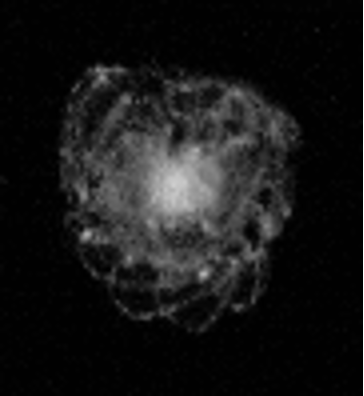
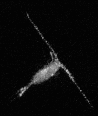
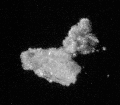
To do this, we have deployed several instruments armed with sensors or cameras. We have mounted an Underwater Vision Profiler 5 (UVP6) on the SeaExplorer glider, on two biogeochemistry Argo floats and on the CTD rosette. The UVP6 camera detects and captures images of plankton and marine snow down to 1000m depth.
During the biogeochemistry super deployment earlier in the cruise (link to BGC blog), we launched the SeaExplorer glider to circulate at the border of the two eddies and to cross the front. We hypothesised to find plankton and marine snow entrained by the horizontal and vertical circulations along the track. After 20 days of monitoring, we recovered the glider. This dataset will help us to understand the coupling between ocean circulation and plankton life.
We also launched two floats, one in the core of the anticyclone and one in the jet to monitor daily, plankton and marine snow distributions during the cruise. After that, we plan to let them drift for few years in the ocean on a western trajectory for the float in the anticyclone and eastern trajectory for the one in the jet. However, these are plans that unpredictable ocean circulation, especially at mesoscale, may change. Whatever their fate, they will provide information about the state of the ocean within the BGC Argo observation network.
All subjects in images on this page are about 0.5 to 1cm


Author and photos credits: Lars Stemman