

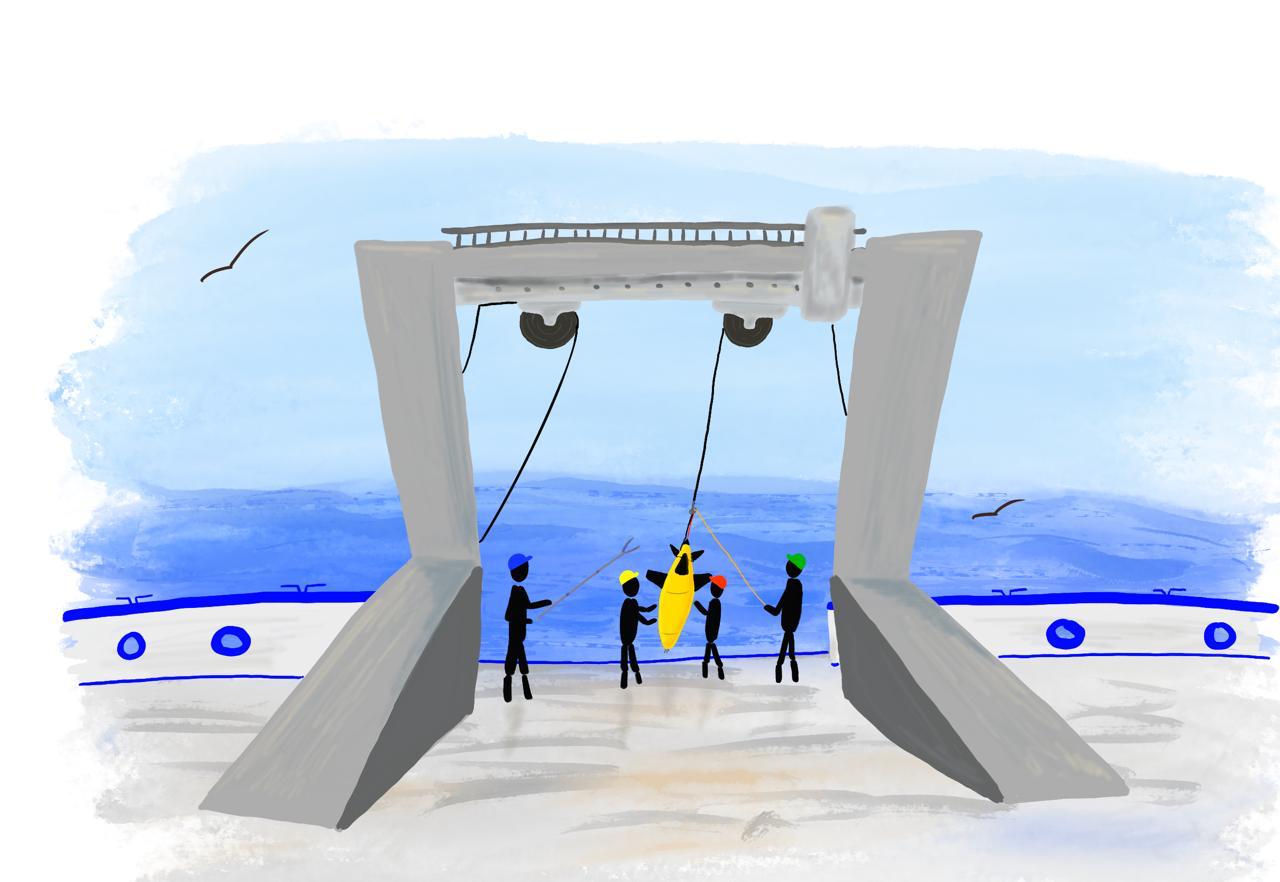
We arrived in the middle of the ‘hot’ eddy in the first few days of the voyage. The ship stopped in lovely weather to get ready to deploy a large array of robotic instruments that would act as the thermometer of the ocean for the months to come. This was our chance to investigate how much heat the ocean eddy was providing to the atmosphere – a warm pool of water 100 miles wide with a cooler windy atmosphere ready to receive the eddy’s heat (and other properties) that can impact the local weather and larger scale climate. These eddies and warm waters originating from the Indian Ocean can persist in the region for months as they spin and make their way from the Agulhas Current south of Africa all the way across the Atlantic Ocean to the Brazilian coast.
Scientists prepared and tested their instruments, while crew and engineers prepped their lines and release mechanisms on the back work deck. With excitement in the air, the deployments started in earnest on Monday afternoon.
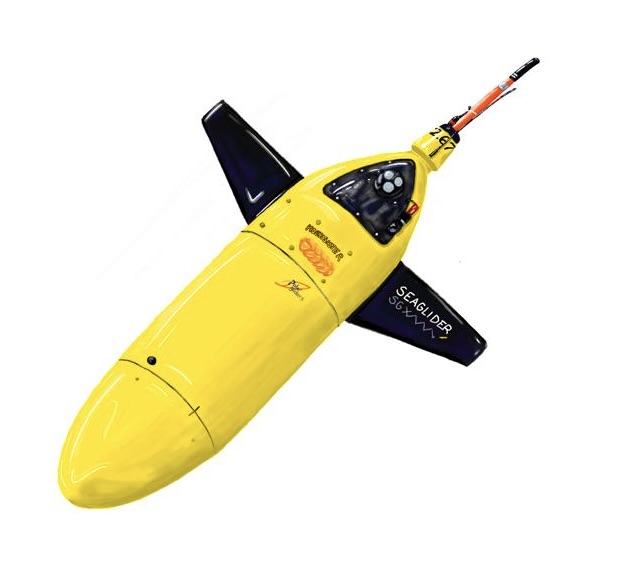
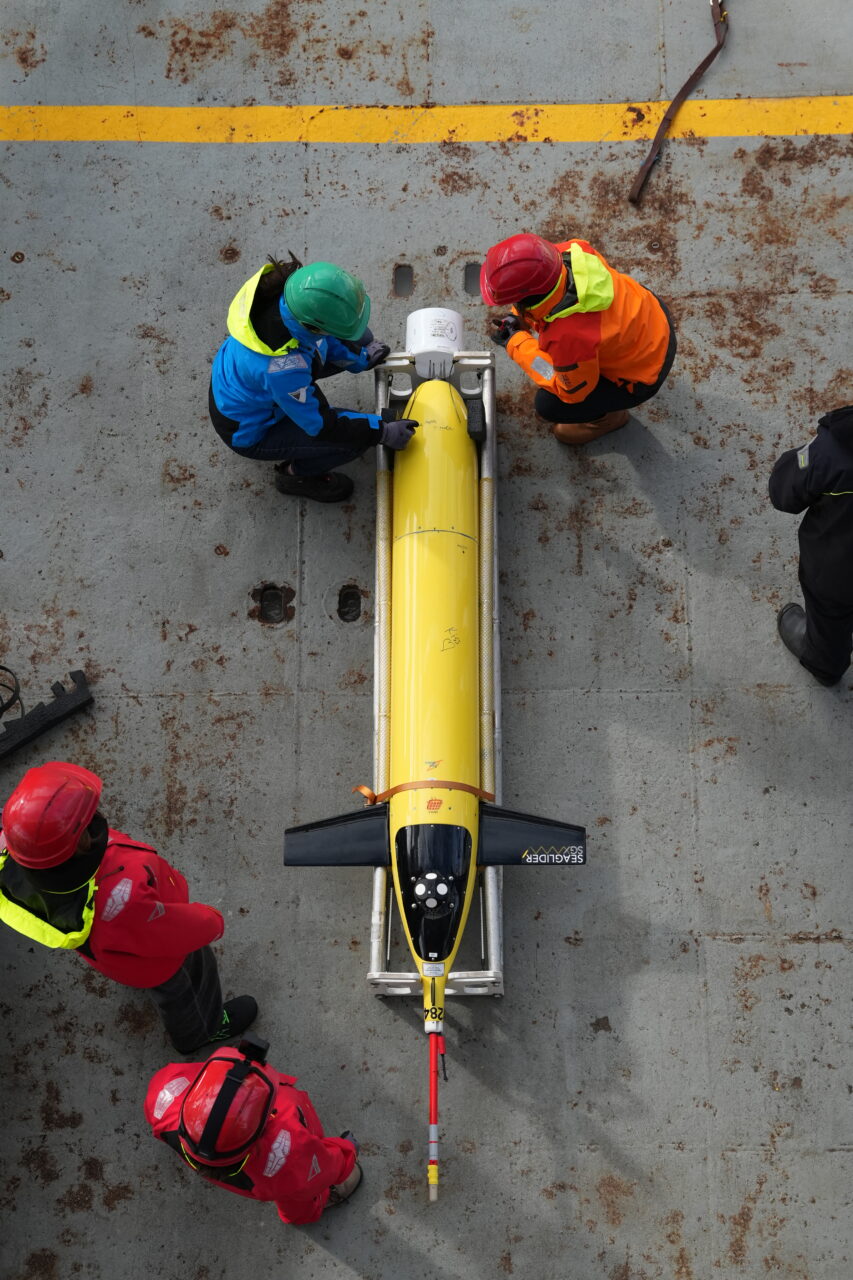
The first to go in the water was an underwater glider that carries very sensitive microstructure sensors on its nose to measure millimetre-scale ocean mixing, and an ADCP to measure ocean currents between the surface and 1 km deep into the ocean. This is the first seaglider ever to carry microstructure sensors, and with both microtemperature and shear sensors we are able to study turbulence and mixing from the surface down to 1000m. With a high vertical resolution, the sensors are able to capture the small-scale variability that helps us to understand how the ocean is mixed, how tracers are moved up and down, and how carbon and heat fluxes behave in the ocean.
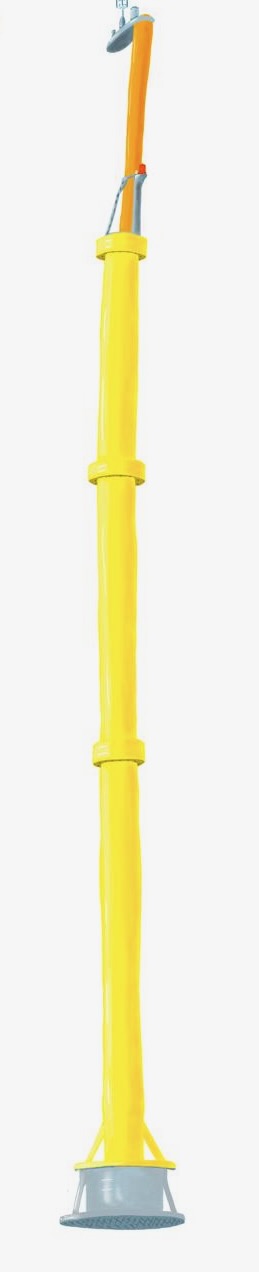
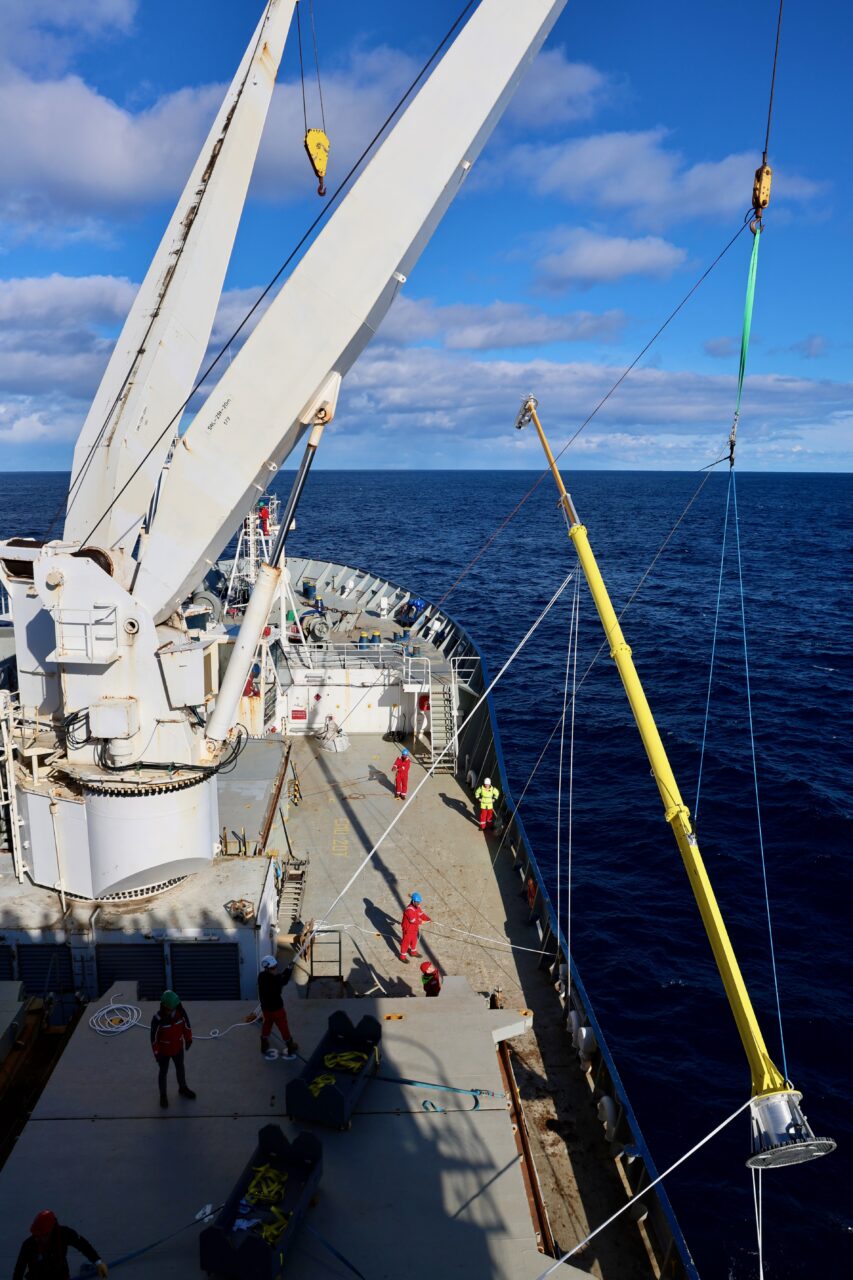
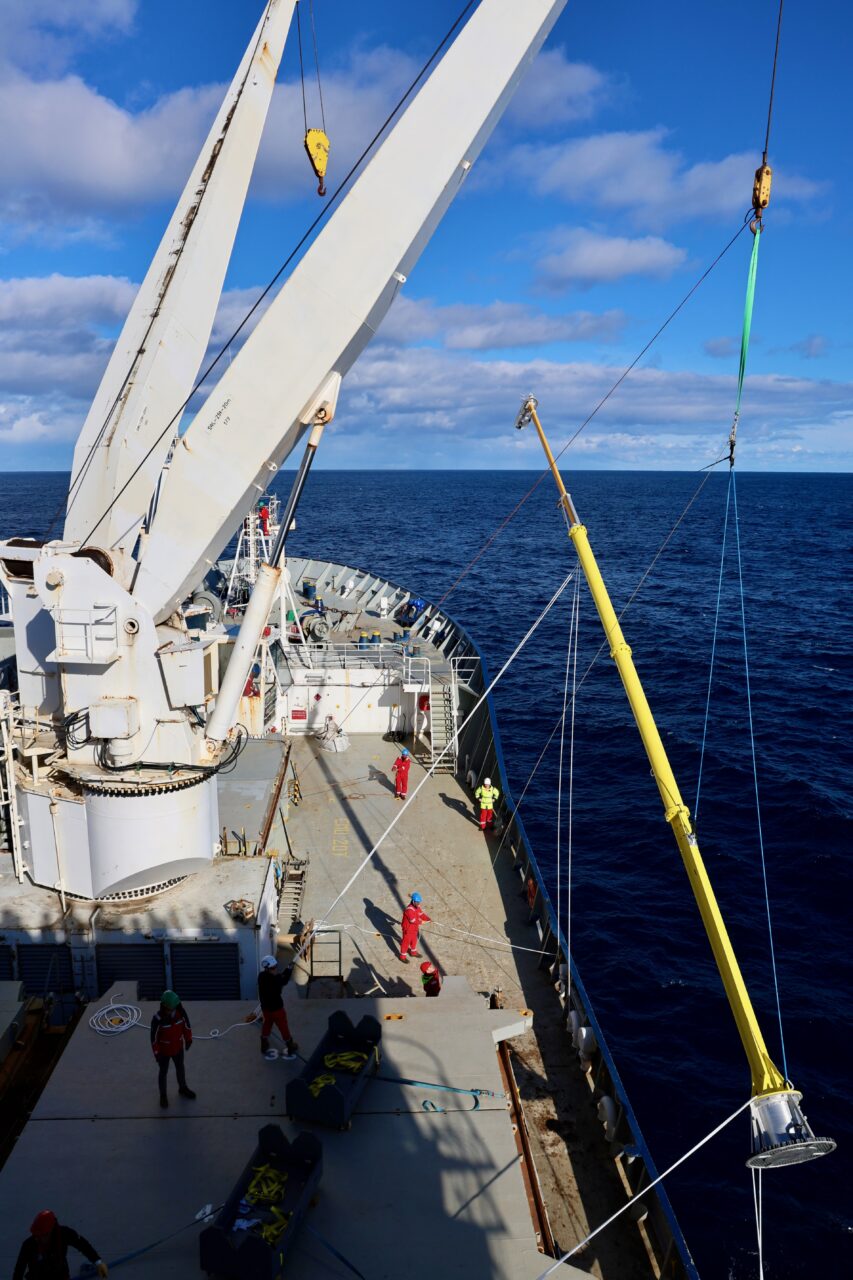
Straight after this glider was deployed, attention turned to deploying the very tricky 19m-long X-Spar buoy from the foredeck with the ship’s large crane. This is the third X-Spar deployed in the entire world and the very first one in the southern hemisphere, and involved the most delicate operation between the crew, officers and scientists on deck to carefully place such a large instrument at sea. The buoy sits buoyantly upright in the water, with around 8m sticking out into the air. This way we can accurately measure air sea interface with temperature sensors both in the atmosphere and at two different depths underwater. Moreover, wind and humidity sensors can inform on the direction of the heat flux between the ocean and the atmosphere, with drift speed and wave height measurements giving us insight into the sea state conditions.
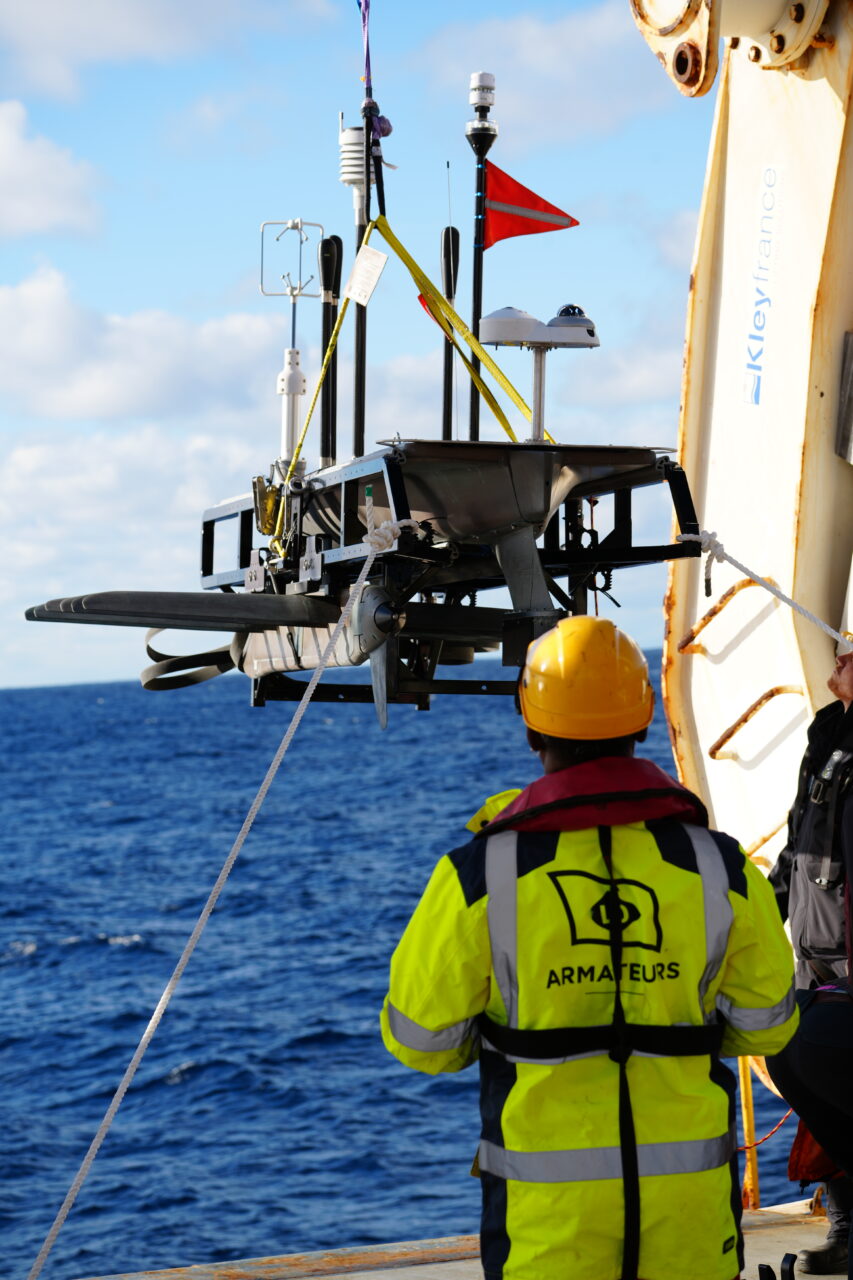
Then it was the turn of deploying the Wave Glider – an autonomous surface vehicle that navigates on the surface using waves and solar panels to power its propulsion and sensors. This instrument, which sits right at the air-sea interface, captures the high-frequency ocean conditions like temperature, salinity, and ocean currents down to about 100m. Above the waves, it holds a weather station and sonic anemometer to study the turbulent transfer of heat across the air-sea boundary, and radiometers to monitor solar and infrared radiation from the sun and clouds. This way, we can get a reliable estimate of the full air-sea heat transfer in this climatically important region.
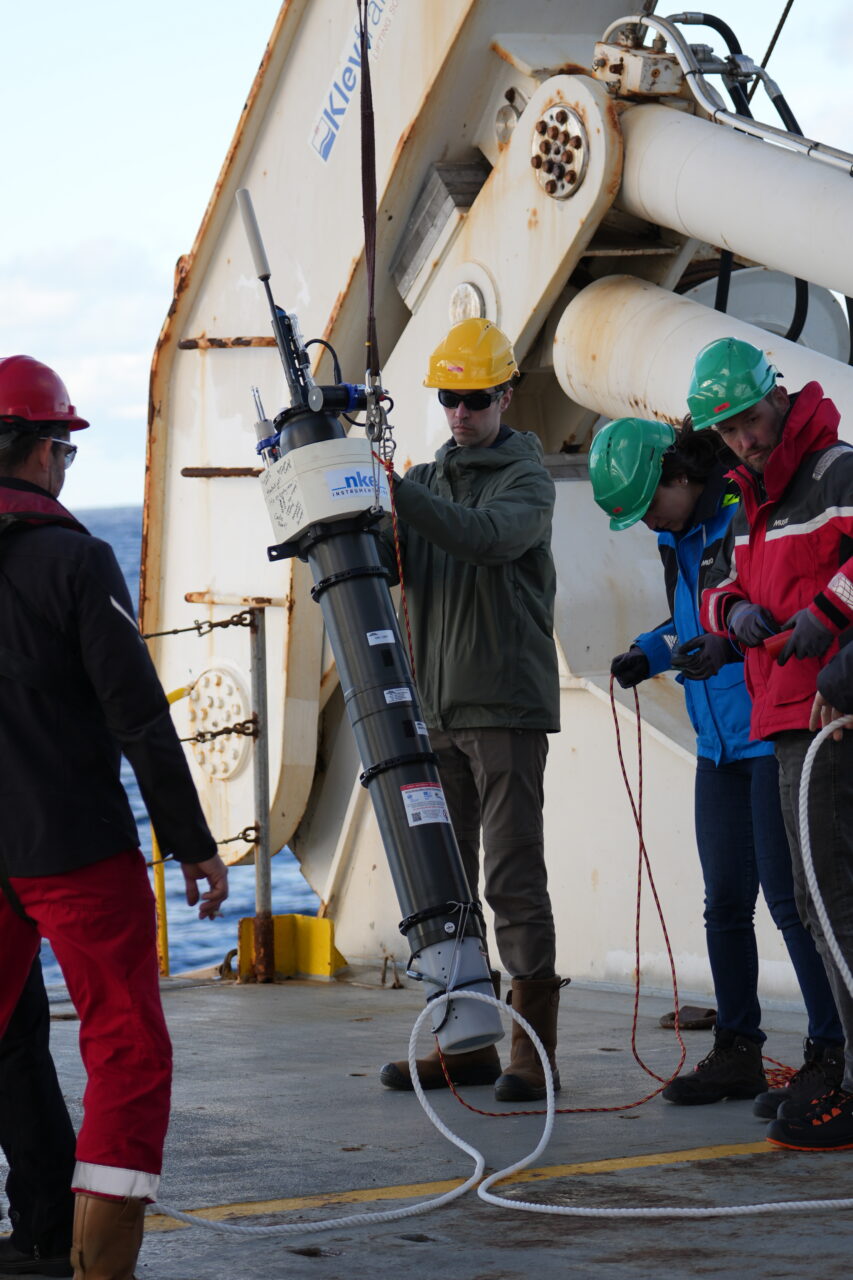
Next were two profiling floats, one to measure the microstructure mixing and the other to focus on biogeochemical properties. Finally, a bunch of surface drifters were launched off the deck.
“This was the largest and most varied amount of autonomous instruments I have deployed in a single day and in a single region. It’s really special because we are bringing so many different types of observations together in place – connecting observations from the top of the atmosphere with sensors attached to balloons, to the very surface of the ocean, and all the way into the interior of the ocean… a simultaneous tango between all the robotic instruments,” says Seb Swart.
The project plans that these instruments will remain together at sea for several months. Onboard, specialized pilots in the team are dedicated to steer the glider and Wave Glider in sampling patterns around the X-spar and remain in this warm-cored eddy to observe how it evolves and interacts with the atmosphere.
Authors:
- Seb Swart
- Marcel du Plessis