

To record rare events and patterns in the marine environment, a small group of researchers on the cruise is relying on direct observation methods. The three teams record birds, marine mammals and floating debris, mainly while the ship is underway, to estimate the density of top predators and floating debris in relation to the different water masses and fronts of the Cape Basin. All three are relatively scarce. Two-thirds of the way through the cruise, we have conducted over 1200 kilometres of transects in oceanic waters, and seen fewer than 1050 birds, 80 groups of marine mammals and 50 floating items.
Seabirds are arguably the best studied group of marine predators. Because they are constrained to breed on land, we can track seabird population trends and assess their diets while breeding. Over the last few decades we have gained remarkable insights into their lives at sea by equipping them with miniature data loggers and transmitters that record where they go, how deep they dive, when they eat, and even with whom they interact. However, these data only apply to a handful of individuals, mainly breeding adults of the larger species; to understand seabird communities in their natural environment there is still no substitute for observing them at sea.
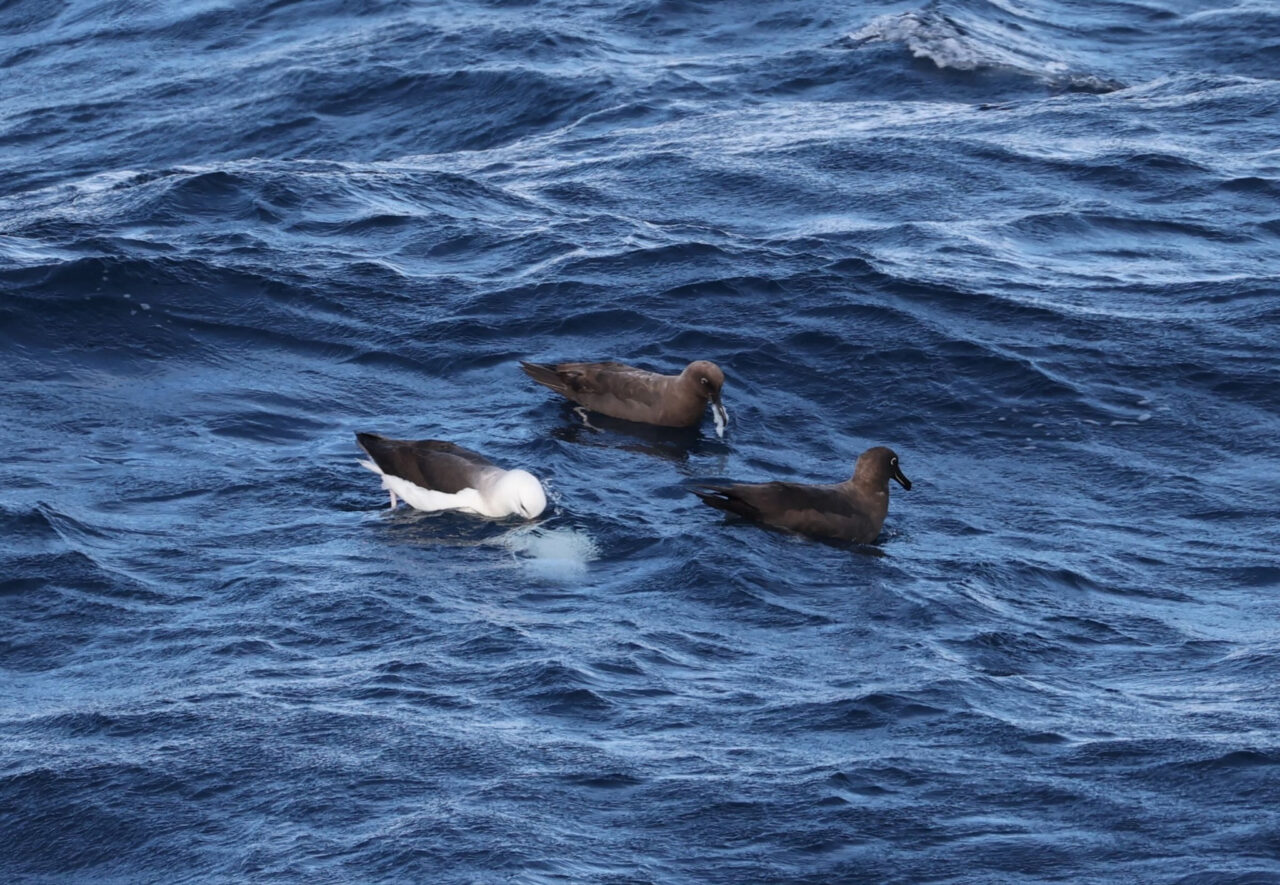
Virtually all the seabirds that inhabit the Cape Basin in winter are albatrosses and petrels that breed on remote islands scattered throughout the Southern Ocean. These species only return to land to breed; when the young birds leave their nests they do not return for several years. Because most species breed in summer, they are free to roam wherever they want in winter, and thus where we see them should provide an index of the abundance of their prey – mainly squid, crustaceans and fish. We know little about the distribution of these prey species, but they should be related to the densities of zooplankton and phytoplankton, which are being measured by other teams aboard the Marion Dufresne.
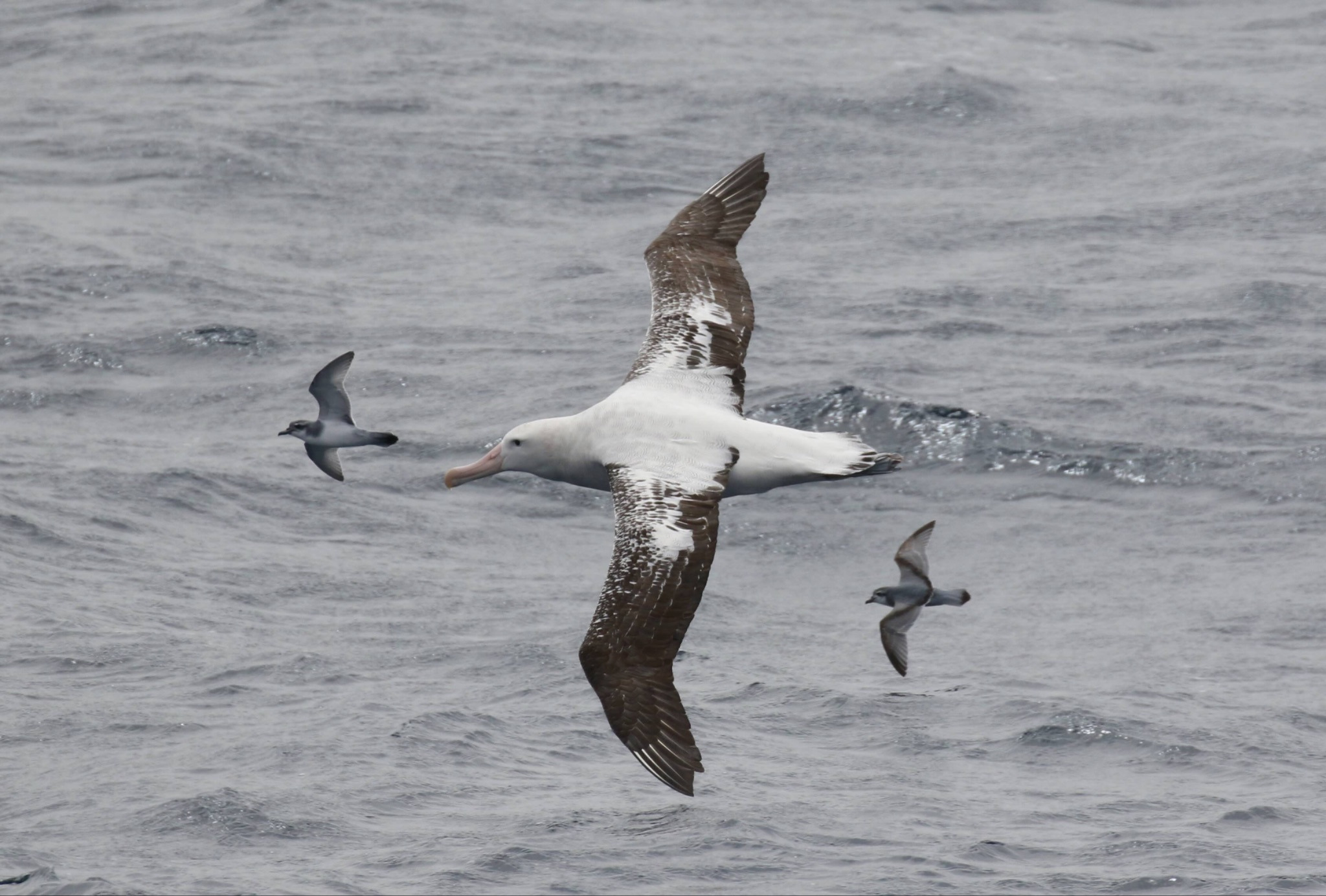
To date, Bruce Dyer and I have seen 28 species of seabird in oceanic waters, ranging in size from the majestic Wandering Albatross that feed mainly on dead squid, to the diminutive prions or ‘whalebirds’ that strain zooplankton from the water with filtering lamellae on the sides of their bills. Perhaps the most surprising observation has been the relatively large number of albatross feeding events seen, particularly in the anticyclonic eddies. Albatrosses and petrels often use scent to locate their prey, but they also cue in on other feeding birds, with larger species displacing smaller birds from food items. This winter has also been unusual for the irruption of Blue and Kerguelen Petrels well north of their typical range in Antarctic waters. The last such event that occurred around the Southern Ocean was in July 1984, which coincidentally was when I made my first month-long research cruise off the coast of South Africa. We look forward to matching our observations to the biological and physical oceanography to hopefully better understand how these impressive birds make a living at sea.
Featured image: A Wandering Albatross flanked by two Salvin’s Prions, showing the large range of body size among pelagic seabirds in the Cape Basin. Photo credit: Peter Ryan
Author: Peter Ryan