

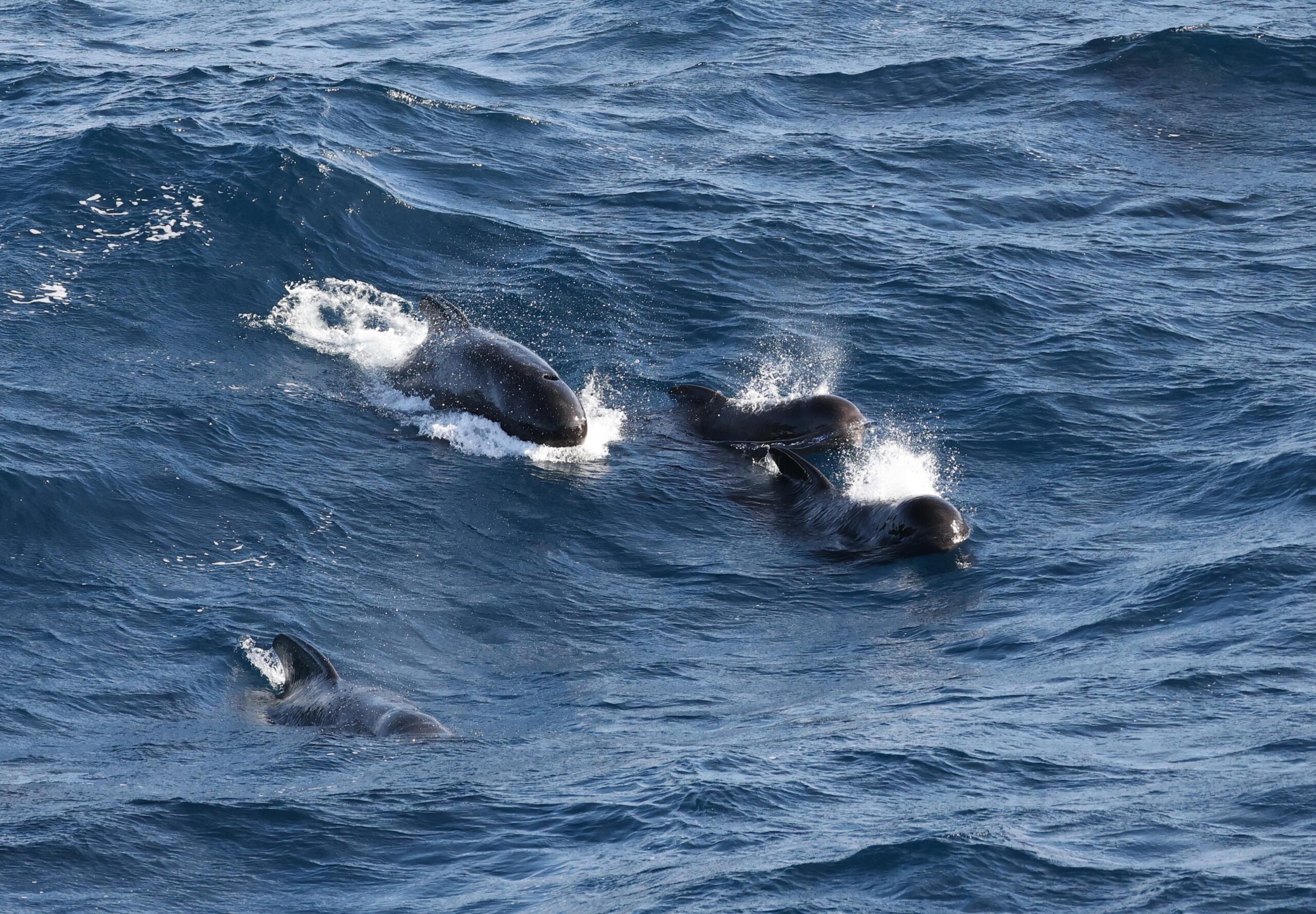
Unlike land breeding marine mammals (seals), whales and dolphins are fully dependent on the marine environment for all their life history stages (e.g., breeding, nursing and feeding). This makes them relatively inaccessible and expensive to study. Their movements, habitat utilisation and behaviour are studied through telemetry (mostly satellite-linked data transmitting tags) and archival animal borne instruments such as cameras and hydrophones. These are however limited to a few individuals. To better understand their distribution and relative abundance, ship-based surveys are required. Ship’s time for dedicated work is expensive, so platforms of opportunity come in handy.
The WHIRLS cruise offered the chance to survey marine mammals in the Cape Basin, a deep-ocean basin in the southeastern Atlantic Ocean, southwest of South Africa. Here the Southern Ocean, Benguela Current and Agulhas Current interact to drive a rich diversity of marine mammals, with an inshore – offshore gradient. The Cape Basin is part of the distribution range of a variety of whales. Two types of whales can also be found, toothed and baleen whales. Toothed whales include Pilot, Beaked and Sperm whales – together with the largest member of the dolphin family, Orcas or Killer Whales. Baleen whales include Humpback, Southern Right, Fin, Sei and an occasional Blue and Minke Whale. Humpback, Southern Right, Fin and Sei Whales transit through the basin during annual movements between feeding and breeding grounds. Little is known about Fin whales in this area. Recent studies indicate that their peak acoustic presence is in July – which would explain the high encounter rate during this campaign. Sei whales and beaked whale sightings are highly unpredictable in the area.
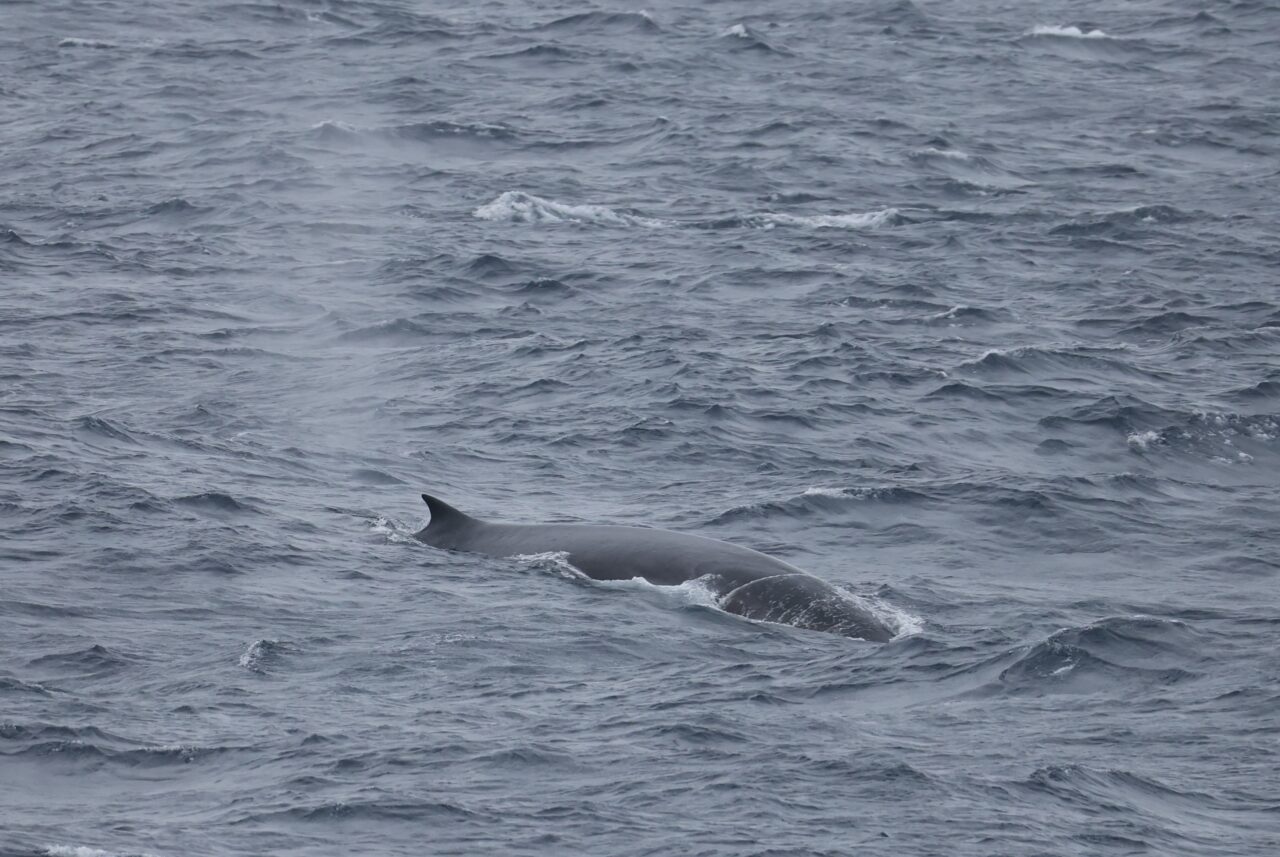
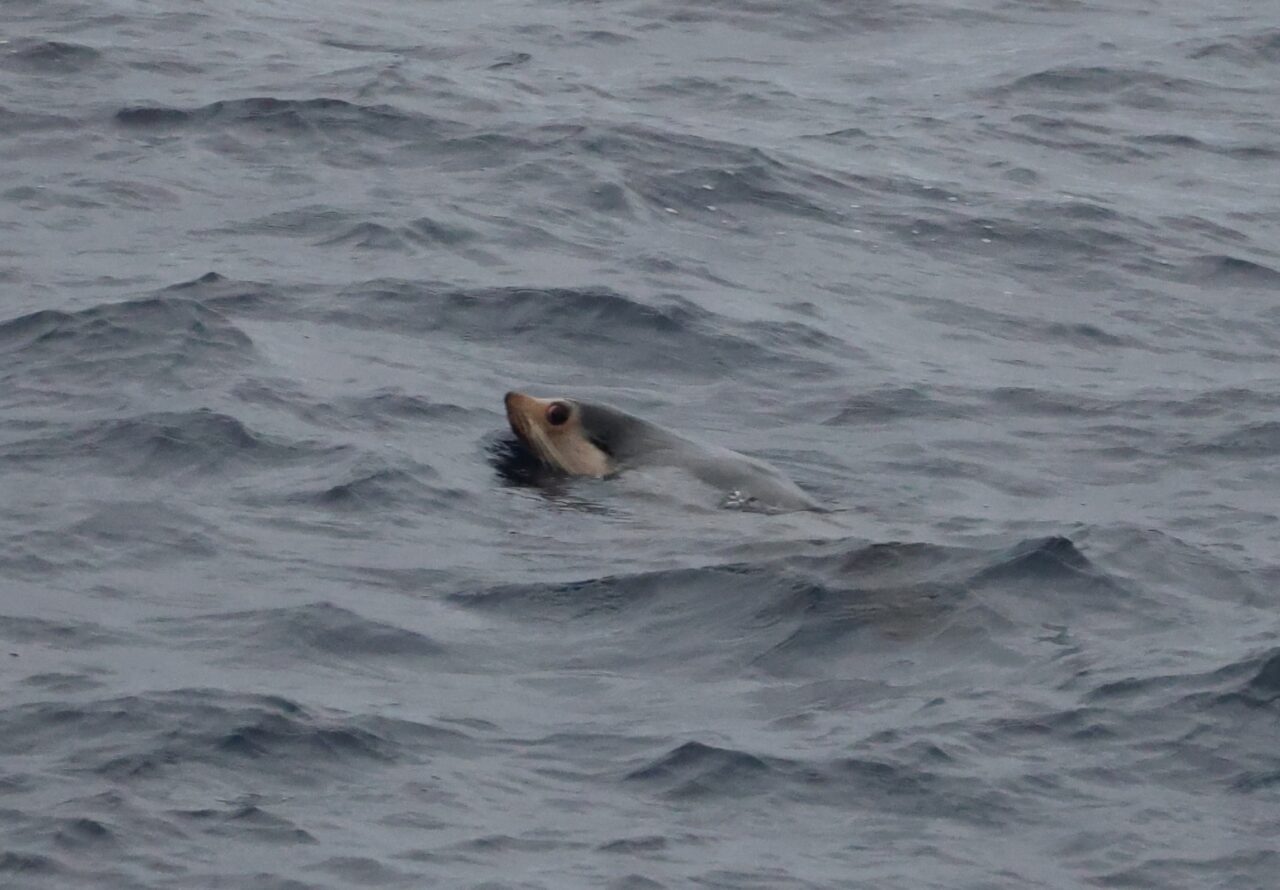
During the WHIRLS campaign, participants have been very enthusiastic to see these majestic animals. With more eyes on the water, including the help of seabirds and macro-plastics observers, we have managed to record ~89 encounters of marine mammals, mostly whales. Over 100 hours have been spent on watch, ranging from 0.7 hours daily on a bad weather day to 10 hours on good days, when a watch is maintained from sunrise to sunset. The often-rough seas resulted in only 60% of sightings being identified. Humpback whales accounted for 35% of all sightings, most of which appeared to be migrating north. We encountered a male Subantarctic Fur Seal in excellent body condition. Given that the nearest known breeding colonies are at Gough Island and the Prince Edward Islands, approximately 1,882 km and 2,428 km away from location of encounter, respectively, this observation represents a substantial offshore movement from known breeding sites. This is consistent with their known tendency to wander far from breeding localities outside of their summer breeding season.
Preliminary findings indicate that there were fewer whale encounters in the mature anticyclone relative to the jets and front areas. In a vast ocean space like the Cape Basin, animals maximise energy by feeding where prey densities are the highest. Oceanic jets and fronts are boundaries where different water masses meet, a high energy environment that can lead to localised upwelling that brings nutrients into the surface layer. It is therefore not surprising that there were fewer sightings in the mature anticyclone, which are typically nutrient poor towards the centre. The campaign is yet to sample younger cyclones and anticyclones, which may produce interesting results in terms of marine mammal encounters.
Featured photo: a large pod of pilot whales swim past R/V Marion Dufresne in the Cape Basin. Picture credit: Peter Ryan
Authors: Mduduzi Seakamela and Zain Armien