

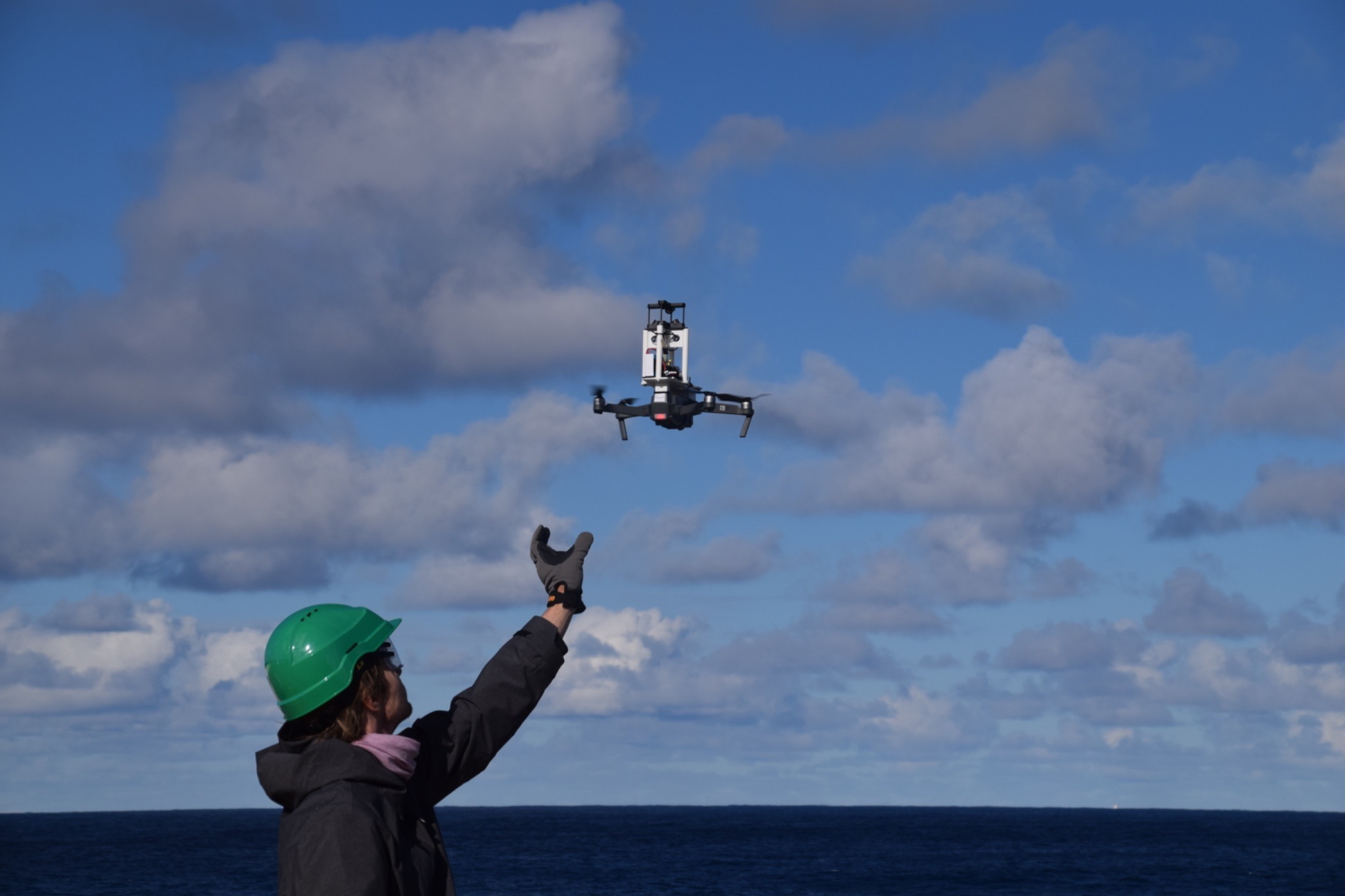
Uncrewed Aerial Vehicles (UAVs) – more commonly known as drones – are widely used in various activities due to their ability to travel long distances independently, equipped with all sorts of sensors such as cameras and thermometers.
During WHIRLS, we use drones because of their unique ability to fly very close to the water, filling in the measurement gap of balloons or lidars (link to previous posts) between the ocean surface and a few tens of meters of height. This critical region at the interface of air and sea is crucial to understanding the interplay between those two bodies.
Setting up a scientific drone strategy
The measurement strategy employed during the campaign starts with the setup. Our drones are lightweight, and equipped with a custom 3D printed platform, on which we attach sensors for atmospheric measurements. We gather data about wind speed, pressure, temperature, and humidity. We use several sensors for cross comparison.
The usual flight path involves vertical profiles up to 300 meters and, depending on the type of sensors used, either we perform repeated vertical profiling, or we make the drone stop at different levels for a minute on the way down to measure wind speed limiting the impact of the rotors on the measurement.
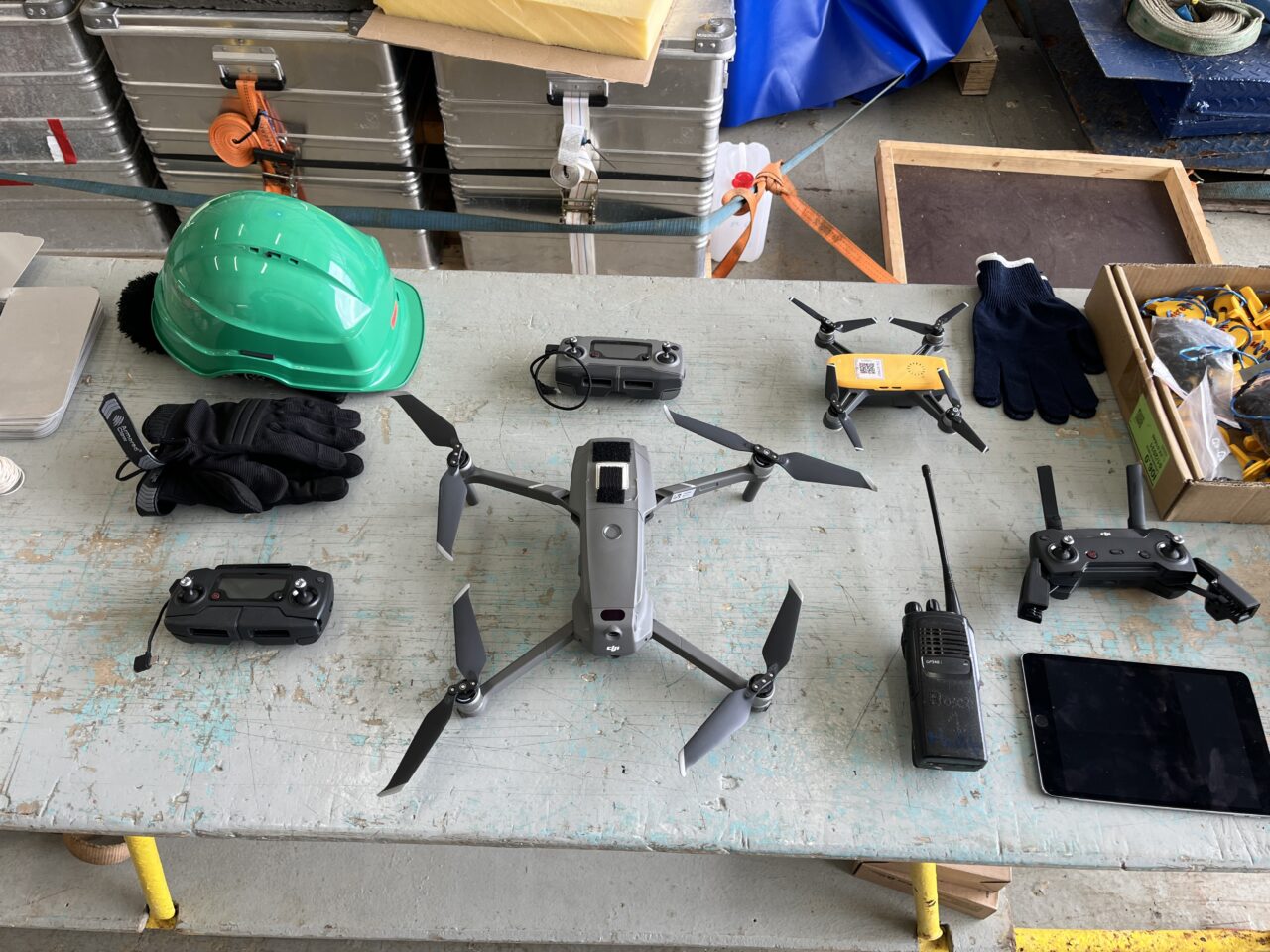
Because of the wavy movement, flying from and to a ship can be tricky. The first difficulty is that the drones are programmed in such a way that they record the take-off location and try to keep it for the duration of the vertical profiling. Therefore, we can’t fly if the ship is moving, because we would shift too far from the take-off location. Second, the flights are also limited by rain and strong wind velocity ( > 15 m/s). To account for these limitations, we try to fly as much as possible to fill in the critical gap in measurement data.
We also developed a special strategy for taking off and landing from a ship. It requires some bravery at first, and safety equipment to protect the operators from the rotating wings. Both operations require good coordination between the pilot and the catcher because wavy movements of the ship and the wind velocity can cause sudden movements that need to be anticipated.
Catching the drone is like playing a match of quidditch.
Featured image: Researcher Stanisław Król catches the drone. Picture credit: Diego Lange
Authors: Stanisław Król, Michał Ciuryło